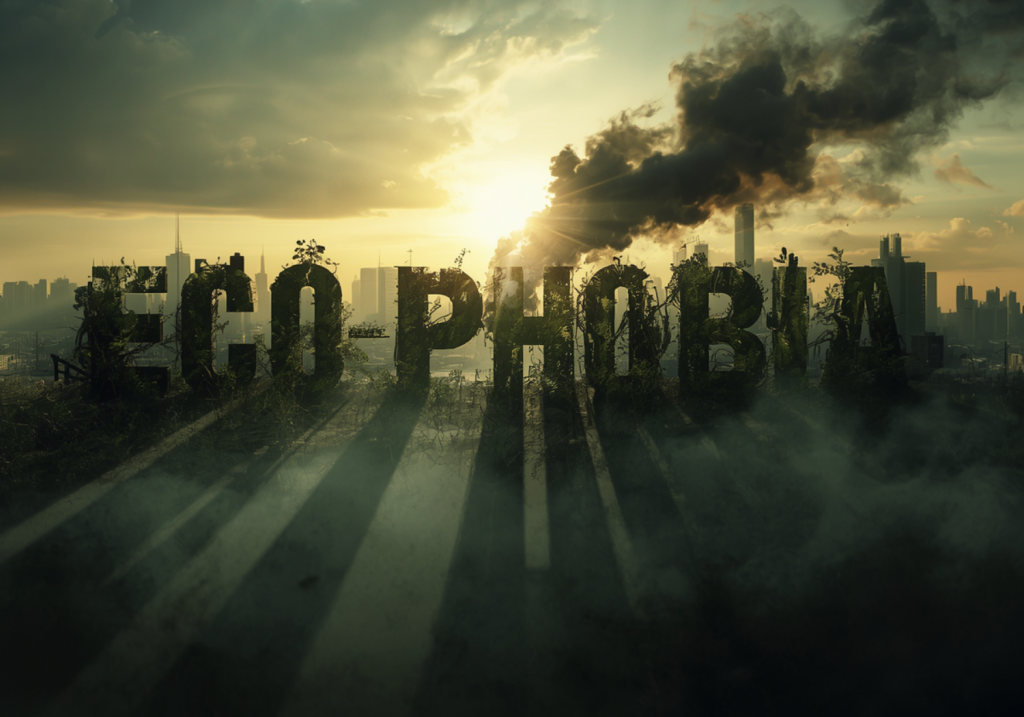
Are Environmental Fears Creating Anxiety in Your Family?
Many People Are Becoming Aware of the Environmental Challenges Facing Our World
Over the past several years, many families have become increasingly aware of the environmental challenges facing our world.
Children, teens, and adults are seeing images of powerful storms, wildfires, floods, droughts, threatened wildlife, and changing landscapes. Through television, social media, and online news, many people are exposed to a constant stream of environmental stories—often focused on crisis, destruction, and uncertainty.
Awareness is important.
Caring about the Earth is important.
But what happens when concern turns into fear?
What happens when a person’s love for nature becomes mixed with anxiety, guilt, or a feeling of helplessness?
What happens when the natural world itself begins to feel frightening?
This is an experience that many families are quietly navigating.
When Environmental Awareness Becomes Overwhelming
The term eco-phobia can describe a fear-based relationship with environmental concerns. For some people, this may appear as intense worry about climate-related events or feelings of guilt about human impact on the Earth.
For others, eco-phobia may manifest as a fear of nature itself.
A person may begin to associate the natural world primarily with danger:
- Storms become something only to fear rather than natural systems to understand.
- Forests become associated only with fires or destruction.
- Weather changes become a source of constant anxiety.
- The Earth begins to feel fragile, unpredictable, or even threatening.
Some People May Begin to Wonder:
“Is the Earth angry with humanity?”
“Are these events happening because humans have failed to care for nature?”
These questions often come from a place of love and concern. They reflect a desire to understand our relationship with the planet.
However, when fear becomes the primary lens through which we view nature, something important can happen:
We can lose our sense of connection.
And connection is exactly what we need most.
Difficult Emotions Arise When We Become Aware of How Human Activities Have Inflicted Damage on the Environment
When we become aware of the ways human activities have affected the environment, it is natural to experience difficult emotions.
We may feel sadness.
We may feel regret.
We may recognize choices we wish we had made differently.
These feelings are not signs of failure.
They are signs of awareness.
However, there is an important difference between remorse and guilt.
Guilt says:
“I am the problem.”
Remorse says:
“I recognize something that needs healing, and I want to do better.”
Guilt can leave us feeling powerless and ashamed.
Remorse can become a doorway to wisdom.
It allows us to recognize the places where we have been unconscious and make more thoughtful choices moving forward.
The purpose of ecological awareness is not to create a generation of people who feel responsible for every environmental problem on Earth.
The purpose is to awaken people to their ability to participate in creating a healthier future.
Children and Young Adults Alike, Carry the Emotional Weight of Environmental Concerns
Children of all ages are naturally sensitive to the world around them. They often have a deep connection with animals, plants, and the beauty of nature.
This sensitivity is a gift.
However, without guidance, children can sometimes absorb environmental concerns in ways that feel overwhelming.
A child may worry:
“Will there still be animals and thriving ecosystems when I grow up?”
“Will my future be safe?”
“Did adults ruin the Earth?”
These are not questions to dismiss.
They are opportunities for connection.
Children need honesty, but they also need hope.
Rather than simply sharing frightening information, we can help children understand:
- The Earth is experiencing challenges.
- Humans have made mistakes.
- Humans also have the ability to learn, restore, and create positive change.
- Every generation has an opportunity to become a better caretaker of the planet.
Children need to know they are not inheriting only problems.
They are also inheriting the ability to become part of the solution.
Watch the Video version of this newsletter here:
https://www.youtube.com/@Eco-LearningLegacies
Listen to the Audio Podcast Version of this newsletter here:
Teens and Young Adults: Moving Beyond Fear and Frustration
Many teens and young adults are especially aware of environmental issues. They are growing up during a time when global challenges are highly visible and constantly discussed.
Some may experience:
- anger toward previous generations
- anxiety about their future
- frustration that change feels too slow
- hopelessness about whether their choices matter
- emotional exhaustion from constant exposure to distressing news
These feelings are understandable.
Young people often care deeply because they understand that the future belongs to them.
But caring deeply requires balance.
A Compassionate Heart Needs Restoration, Too
Constant exposure to tragic stories can lead to what some call compassion fatigue or compassion burnout—the experience of caring so much that emotional resources become depleted.
Taking breaks from distressing news is not the same as ignoring problems.
It is an act of self-care that helps us remain engaged for the long term.
We cannot nurture the Earth if we are disconnected from our own well-being.
Returning to a Relationship with Nature
One of the most important ways to move beyond environmental fear is to rebuild a relationship with the natural world.
Fear often grows from distance.
Connection grows from experience.
A child who plants a seed learns that nature is not only something being damaged—it is something capable of renewal.
A family walking through a forest can remember that nature is not only a place of danger—it is also a place of beauty, healing, and inspiration.
A person growing food can rediscover that humans are not separate from Earth’s systems—we are participants within them.
Eco-lifestyle education helps restore this relationship.
It teaches us to see the connections between:
- the health of our bodies and the health of the Earth
- the food we eat and the ecosystems that sustain it
- the products we choose and the environments they affect
- our daily habits and our collective future
The goal is not fear.
The goal is wisdom.
From Eco-Fear to Eco-Wisdom
The Earth does not need a generation of people who are afraid of nature.
She needs a generation of people who understand their relationship with nature.
She needs people who can acknowledge challenges while also recognizing possibilities.
She needs people who can move from:
Fear → Understanding
Guilt → Responsibility
Helplessness → Empowerment
Awareness → Stewardship
This is why education matters.
When individuals, families, and educators have access to meaningful tools and resources, they can develop a deeper understanding of how to care for themselves and the Earth.
Eco-intelligence is not about knowing every environmental problem.
It is about developing the wisdom to live in relationship with the living world.
Because the future will not be created through fear.
It will be created through awareness, compassion, creativity, and love.
Gentle Reflection
Has learning about environmental challenges ever caused you or someone in your family to feel overwhelmed?
What is one way you can reconnect with the beauty of the natural world and transform concern into meaningful care?
Candia Lea Cole
Founder Eco-Learning Legacies