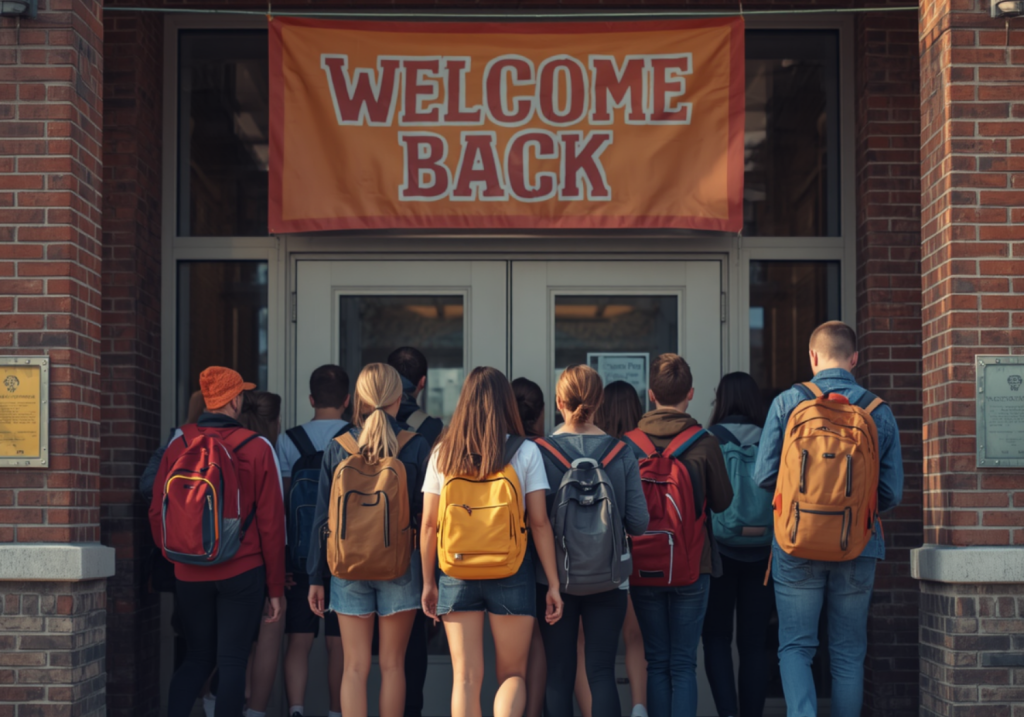
As Another School Year Begins…
As another school year begins, backpacks are packed, classrooms are prepared, and families everywhere are settling into familiar routines. Parents hope their children will gain the knowledge and skills they need to succeed in school, discover their unique gifts, and prepare for meaningful futures.
These are worthy hopes.
Yet as I reflect on the world today’s children (both young and older alike) are inheriting, I find myself asking another question:
What Else Do Our Kids Need to Learn?
The world our children are growing up in is changing rapidly. They are witnessing shifting weather patterns, declining biodiversity, increasing rates of chronic illness, rising stress, and growing uncertainty about the future. They are surrounded by technology that connects them to the world, yet many spend less time experiencing the natural world itself.
Academic subjects remain essential, but they are only part of an education. Reading, writing, mathematics, science, and history provide important foundations. Equally important, however, are the life skills that help young people understand their relationship with their own bodies, with one another, and with the living Earth that sustains us all.
This is Where Eco-Lifestyle Education Comes In
Eco-lifestyle education is not another school subject. It is a way of learning to see the connections between everyday choices and the health of people, communities, and the planet. It encourages children and young adults to become curious observers, thoughtful decision-makers, and compassionate stewards of the world around them.
Imagine If….
- Imagine if every child learned where food truly comes from—not just the grocery store, but healthy soils, pollinating insects, clean water, and dedicated farmers.
- Imagine if they understood how sleep, nutrition, movement, time in nature, and supportive relationships influence physical and emotional well-being.
- Imagine if they learned how everyday products affect both human health and the environment, and how small, thoughtful choices can make a meaningful difference over time.
- Imagine if they viewed nature not simply as a place to visit, but as a community to which they belong.
These lessons do more than build knowledge. They cultivate gratitude, responsibility, resilience, and hope.
Our Schools Already Carry Tremendous Responsibility
Our schools already carry tremendous responsibility. Teachers work hard to inspire learning across many subjects, often with limited time and resources. Eco-lifestyle education is not intended to add another burden to classrooms. Instead, it invites families, communities, mentors, and lifelong learners to become partners in a child’s education.
Watch the Video version of this newsletter here:
https://www.youtube.com/@Eco-LearningLegacies
Listen to the Audio Podcast Version of this newsletter here:
Some of Life’s Most Beautiful Lessons Happen Outside of School
Some of life’s most meaningful lessons happen around the kitchen table, in a garden, during a walk through the woods, at a local farmers’ market, or while preparing a meal together. Children remember what they experience. They remember planting seeds, watching butterflies emerge, tasting vegetables they helped grow, listening to birdsong, and asking questions about the world around them.
These everyday experiences nurture something that no textbook alone can provide: a lasting relationship with the natural world.
As adults, we have an opportunity to broaden our understanding of education. Alongside academic achievement, we can encourage ecological literacy, food literacy, health literacy, and environmental awareness. We can help children recognize that caring for themselves and caring for the Earth are not separate responsibilities—they are deeply connected.
Perhaps the goal is not simply to prepare children for successful careers, but to prepare them for meaningful lives.
Creating a Meaningful Life That Contributes to the Well-Being of Future Generations
A meaningful life includes knowing how to nourish the body, appreciate nature, think critically, care for others, and make choices that contribute to the well-being of future generations.
The challenges facing our world can feel overwhelming, but education has always been one of humanity’s greatest sources of hope. Every new lesson, every thoughtful conversation, and every shared experience has the potential to shape a child’s future.
As this school year begins, perhaps we can ask not only, “What will our children learn in school?” but also, “What will they learn from us?”
Because every child deserves more than an education that prepares them to make a living.
They deserve an education that helps them learn how to live well—within themselves, within their communities, and within the living world we all share.
Gentle Reflection
What is one lesson about caring for yourself or the natural world that you wish someone had taught you as a child?
Perhaps this school year is the perfect time to share that lesson with someone you love.
Candia Lea Cole
Founder Eco-Learning Legacies