What might happen if children had several hours each school day without a smartphone competing for their attention?
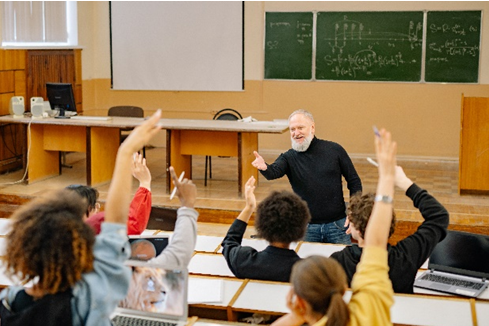
Imagine a classroom where students aren’t checking notifications, responding to texts, watching celebrity videos, scrolling through social media, or worrying about the latest online controversy.
Instead, they are listening. Thinking. Reading. Creating. Talking with one another. Looking out the window. Being fully present.
In a world where children are increasingly connected to digital devices, perhaps one of the most valuable things a school can provide is something surprisingly simple:
A few hours of disconnection.
Cell phones can certainly be useful educational tools when teachers intentionally incorporate technology into a lesson. But there is an enormous difference between using technology for learning and allowing a personal smartphone—with its social media, games, messages, videos, news feeds, and endless notifications—to remain available throughout the school day.
Here are ten reasons worth considering.
- They are powerful distractions.
Smartphones are designed to capture attention. Every notification, message, video, and social-media update competes with the teacher standing in front of the classroom.
Learning requires sustained attention. A phone makes that attention much harder to protect.
Research on digital distraction in education has found that technology-related interruptions can interfere with concentration and learning.
- Children need opportunities to develop deep concentration.
Children need practice staying with something that isn’t immediately entertaining.
Solving a difficult problem. Reading a challenging book. Writing. Listening. Thinking.
These are skills that develop through sustained attention—not constant stimulation.
A 2024 systematic review and meta-analysis found a negative association between problematic smartphone use and academic achievement, particularly among younger students.
- Their mental health deserves some breathing room.
Children today may move almost continuously between school, texting, social media, gaming, videos, and online communication.
The U.S. Surgeon General has warned of significant potential risks associated with social-media use among young people, including concerns related to depression, anxiety, body image, and social comparison.
A phone-free classroom cannot solve these problems. But it can provide several hours in which children aren’t required to participate in the digital world.
- It can reduce opportunities for cyberbullying.
A hurtful message can arrive in the middle of class.
A humiliating photograph can circulate during lunch.
An online argument can follow a child throughout the school day.
The CDC recognizes bullying as an important contributor to emotional distress and other serious consequences for young people. Its 2023 Youth Risk Behavior Survey analysis also found associations between frequent social-media use, electronic bullying, persistent sadness or hopelessness, and suicide-risk indicators.
Removing phones from classrooms won’t eliminate cyberbullying—but it can reduce its immediate accessibility during the school day.
- Children need a break from celebrity culture and social comparison.
Who is famous?
Who is beautiful?
Who has the most followers?
Who went viral?
Who is wearing what?
Who broke up?
Children, teenagers, and young adults can spend extraordinary amounts of time watching the carefully edited lives of people they have never met.
They need time to discover who they are, rather than continually comparing themselves with who someone else appears to be.
Watch the Video version of this newsletter here:
https://www.youtube.com/@Eco-LearningLegacies
Listen to the Audio Podcast Version of this newsletter here:
- They don’t need a constant stream of sensational news.
News is no longer something we encounter once or twice a day. It can arrive every few minutes.
Violence. Disasters. Political conflict. Celebrity scandals. Tragedies. Fear-producing headlines.
Children need to learn about the world, but they don’t need the entire world arriving on their phones all day long.
Schools can teach children to evaluate information without requiring them to consume an endless stream of it.
- Face-to-face relationships need protection, too.
Something important happens when children look at one another.
They learn to read facial expressions, listen to tone of voice, resolve disagreements, show empathy, and communicate without a screen between them.
A classroom should be one of the places where children learn how to be with other human beings.
- Their eyes and bodies need breaks from screens.
Prolonged digital-device use can contribute to eye strain, dry eyes, headaches, blurred vision, and other symptoms of digital eye strain.
Children and young adults alike, already spend considerable time with screens outside school.
Do we really need to make every available minute of the school day another opportunity to stare at one?
Sometimes young people simply need to look up.
- Constant digital stimulation may make it harder to find calm.
Smartphones can deliver an extraordinary stream of stimulation—messages, sounds, images, social feedback, entertainment, conflict, and novelty.
Children need stimulation.
They also need stillness.
They need excitement.
They also need calm.
A phone-free classroom can provide a small but meaningful period of mental quiet.
- What about radiofrequency radiation?
This deserves thoughtful consideration rather than dismissal.
Cell phones emit radiofrequency (RF) electromagnetic energy. Researchers have specifically investigated whether children may absorb RF differently from adults because of differences in head size, anatomy, tissue properties, and development.
Some modeling studies have found higher RF absorption in portions of children’s brains under certain exposure conditions, while other studies have reached different conclusions. A large European study has also modeled RF exposure in thousands of children and adolescents, finding that mobile-phone calls were an important contributor to brain RF dose.
So perhaps the most responsible position is one of precaution rather than fear.
If a child does not need a phone for a particular lesson, why require that phone to remain next to the child’s body for hours? Reducing unnecessary exposure doesn’t require us to claim that harm has been proven.
It simply asks:
Why expose children unnecessarily when we can easily create periods of distance?
Perhaps the Bigger Lesson Is Knowing When to Disconnect
The question isn’t whether technology belongs in education.
It does.
Children need digital literacy. They need to understand technology, evaluate information, protect their privacy, and use digital tools responsibly.
But digital literacy does not require digital immersion.
Perhaps schools have another responsibility in this technological age:
To teach children not only how to use technology—but when to put it down.
Imagine giving children several hours each day when they don’t have to worry about notifications, likes, cyberbullying, celebrity culture, sensational news, social comparison, or the next thing appearing on their screen.
Imagine a classroom where the people in the room matter more than the people on the phone.
Where attention is protected.
Where conversation is valued.
Where curiosity can unfold without interruption.
Where children can think deeply, breathe, move, create, and simply be present.
Perhaps one of the most important lessons we can give children in the digital age is this:
You don’t have to be connected to everything, all the time, to be connected to what truly matters.
Candia Lea Cole
Founder, Eco-Learning Legacies
www.ecolearninglegacies.com